
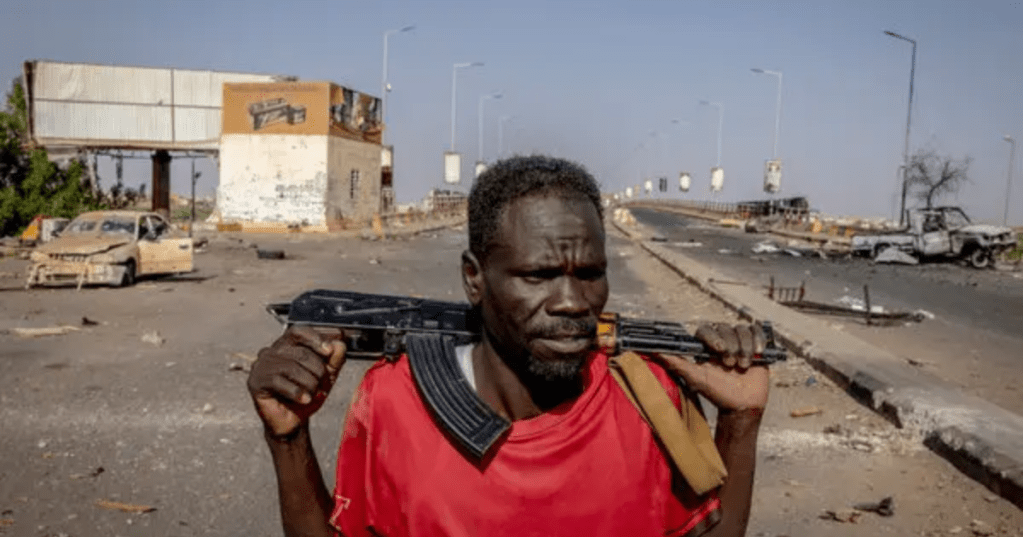
The war in Sudan, now in its third year, has become one of the world’s largest and most complex humanitarian emergencies. To understand how the country reached this point, it is necessary to trace the path from the fall of long-time ruler Omar al-Bashir in 2019, through fragile power-sharing arrangements, to the all-out conflict that erupted in April 2023.
- A brief history: from ancient Nubia to modern Sudan
- The road to 2019
- The uneasy alliance: army, paramilitary and civilians
- The slide into war
- Territorial control today
- Geographical influences on the conflict
- Resources at stake
- Humanitarian crisis in numbers
- Atrocities and accountability
- Is this an ethnic war?
- Allies and backers
- Prospects for peace
- RSF declares parallel government
- Outlook
A brief history: from ancient Nubia to modern Sudan
Sudan’s story stretches back tens of thousands of years. The earliest inhabitants, according to Britannica, were African peoples living in the vicinity of modern-day Khartoum during Mesolithic times (Middle Stone Age; 30,000–20,000 BCE). They were primarily hunters and gatherers who crafted pottery and, later, tools from ground sandstone. By the end of the Neolithic Period (New Stone Age; 10,000–3,000 BCE), these communities had domesticated animals and developed more complex social and economic structures. They maintained contact with the predynastic civilizations to the north in Egypt, though the arid uplands separating Nubia from the Nile Valley limited Egyptian settlement in the region.
Colonial rule shaped modern Sudan more directly. In the late 19th century, Britain and Egypt imposed joint authority, entrenching divisions between north and south. At independence in 1956, Sudan inherited both its diversity and its fractures: a vast territory encompassing Arab, African, Muslim, and Christian communities, with deep economic and regional disparities.
These centuries of shifting power, diversity, and regional divisions set the stage for Sudan’s contemporary political challenges.
The road to 2019
For three decades Omar al-Bashir ruled Sudan, rising to power through a military coup in 1989. His presidency was marked by civil wars, accusations of mass atrocities in Darfur, economic decline, and international isolation. In 2009, the International Criminal Court issued a warrant for his arrest on charges of war crimes, crimes against humanity, and genocide relating to the Darfur conflict.

By 2018, rising food and fuel prices sparked widespread protests across Sudan. These demonstrations grew into a national movement calling for political change. In April 2019, after months of escalating unrest, the military removed al-Bashir from office. Yet the fall of one ruler did not bring clarity over what would follow.
The uneasy alliance: army, paramilitary and civilians
After the coup, power was shared between the Sudanese Armed Forces (SAF), the paramilitary Rapid Support Forces (RSF), and civilian representatives. The SAF, led by General Abdel Fattah al-Burhan, was Sudan’s regular army. The RSF, commanded by Mohamed Hamdan Dagalo – widely known as “Hemedti” – had grown out of the Janjaweed militias notorious for their role in the Darfur conflict of the 2000s.
Together, Burhan and Hemedti dominated Sudan’s security establishment. A transitional agreement created a Sovereign Council, in which military and civilian leaders were meant to steer the country toward elections. But relations between the generals and civilian politicians remained fragile, with each side suspicious of the other’s intentions.

In October 2021, this delicate balance collapsed. Burhan and Hemedti staged a coup, removing civilian leaders from the transitional government. Sudan was once again under military rule, this time shared by the SAF and RSF. The alliance, however, was one of convenience rather than trust.
The slide into war
The most contentious issue between Burhan and Hemedti was the future of the RSF. Plans called for the RSF to be integrated into the regular army as part of security sector reform. For Hemedti, this threatened his autonomy, his command structure, and his political ambitions. For Burhan and the SAF, it was a necessary step to consolidate control.

As negotiations faltered, tensions grew. Both sides mobilised forces in Khartoum and other cities. On 15 April 2023, fighting broke out in the capital between SAF and RSF units. What began as a power struggle within Sudan’s military leadership quickly escalated into a nationwide conflict.
Territorial control today
Two and a half years later, Sudan remains divided between competing authorities.
- The Sudanese Armed Forces control much of the north and east, including Port Sudan on the Red Sea, which has become the de facto administrative centre. They also hold large parts of Al Jazirah and Sennar states after regaining territory from the RSF.
- The Rapid Support Forces retain control of most of Darfur in the west, as well as swathes of North and West Kordofan. Despite setbacks, they remain a powerful force capable of holding ground and inflicting heavy losses.
- Smaller armed groups retain influence in Blue Nile, South Kordofan, and the Nuba Mountains, adding further complexity to the conflict.
While SAF has regained territory in and around Khartoum, neither side has achieved decisive victory. Frontlines remain fluid, and battles for key towns and supply routes continue.
Geographical influences on the conflict
Sudan’s geography has shaped both the course of the war and the humanitarian crisis. It is Africa’s third-largest country, spanning deserts in the north, savannahs in the centre, and fertile farmland along the Nile. This size makes national control difficult, while poor infrastructure leaves many regions isolated.
Strategic areas have become focal points:
- Darfur provides depth and recruitment bases for the RSF.
- Port Sudan on the Red Sea is vital for trade and international engagement, making it a stronghold for SAF.
- The Nile corridor, stretching through Khartoum and Al Jazirah, remains the symbolic and economic heart of the country.
These geographical realities mean neither side can easily project power across Sudan as a whole, prolonging the stalemate.
![The confluence of the White Nile and the Blue Nile in Khartoum. [Zohra BensemraReuters]](https://tut0ugh.news/wp-content/uploads/2025/10/The-confluence-of-the-White-Nile-and-the-Blue-Nile-in-Khartoum.-Zohra-BensemraReuters-1024x538.png)
Resources at stake
Sudan’s war is sustained by competition over resources, above all gold. The RSF controls much of the artisanal mining sector, exporting gold through regional networks to secure foreign currency and weapons. This has given it a steady source of revenue outside state oversight. The SAF, by contrast, retains access to state oil revenues, agricultural land, and formal trade routes, allowing it to maintain salaries and logistics through official channels.
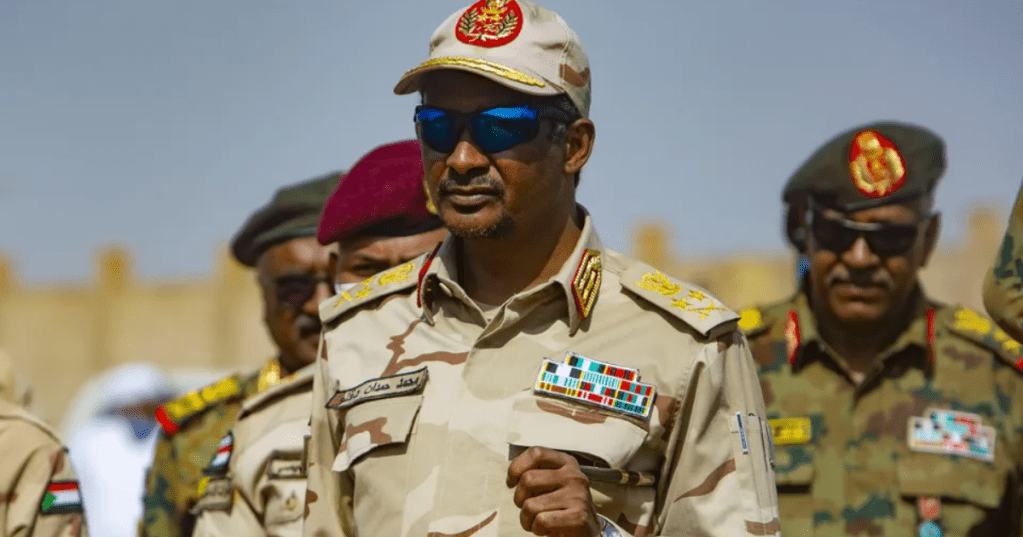
These rival economies prolong the fighting and tie Sudan’s conflict to global commodity markets, where foreign demand makes resource extraction profitable despite war. At the local level, the unequal distribution of wealth deepens frustration, as communities watch national riches funnelled into conflict rather than development. Control of resources, therefore, is not just a prize of war—it is the means by which the conflict endures.
Humanitarian crisis in numbers
The war has triggered one of the largest displacement and hunger crises globally:
- 30.4 million people – around 65% of Sudan’s population – now require humanitarian assistance.
- More than 11 million people are internally displaced, with many experiencing repeated displacement as fighting shifts.
- Between 3 and 4 million people have fled across borders into neighbouring countries, particularly Chad, South Sudan, and Egypt.
- Around 24–25 million people face acute food insecurity. Several areas of Darfur face famine-like conditions, with reported deaths from malnutrition in Zamzam camp.
- Health services are collapsing: hospitals have been destroyed, looted, or forced to close. Shortages of clean water, shelter, and medicine are widespread.
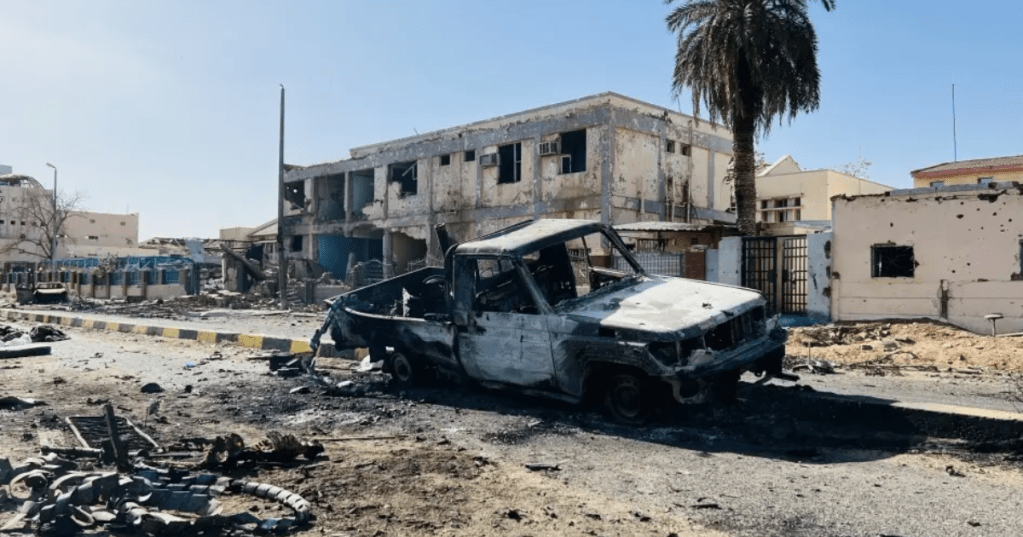
The scale of need far outstrips available resources. United Nations appeals remain severely underfunded, leaving millions without adequate food or protection.
Atrocities and accountability
Both the SAF and RSF have been accused of committing war crimes and crimes against humanity. The RSF and allied militias, in particular, have been accused of mass killings, ethnic targeting, and widespread sexual violence in Darfur. In January 2025, the United States government determined that the RSF had committed genocide in parts of Darfur, though formal international legal judgements are still awaited.
The SAF has also faced credible accusations of indiscriminate shelling, airstrikes in civilian areas, and abuses in recaptured territories. Accountability remains elusive, with neither side showing willingness to submit to investigations or prosecutions.
Is this an ethnic war?
While the conflict began as a struggle between two military leaders, ethnic dynamics are central in some regions. In Darfur, RSF forces and allied militias have targeted non-Arab communities, particularly the Massalit, in what rights groups describe as ethnic cleansing. This targeting has drawn comparisons to the atrocities of the early 2000s.
However, in Khartoum, Al Jazirah, and other central areas, the fighting has been more about control of state institutions than ethnicity. Many Sudanese civilians reject framing the war solely along ethnic lines, emphasising instead its roots in power, ambition, and the militarisation of politics. The reality is that the war contains both dimensions: a national struggle for control, and localised violence with ethnic overtones.
Allies and backers
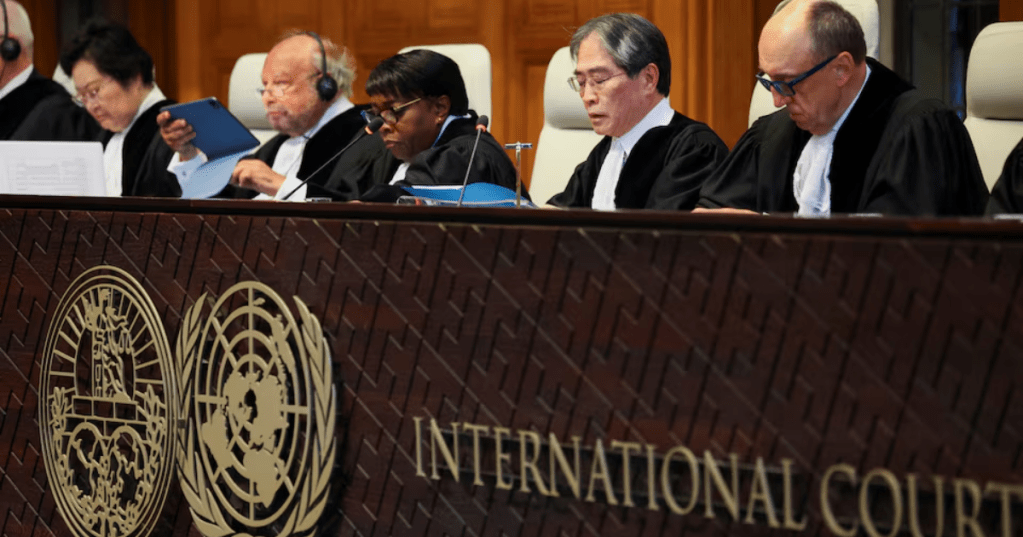
Neither the SAF nor the RSF fights in isolation. The SAF draws strength from formal state-to-state ties, most notably with Egypt, which provides political support and a measure of regional legitimacy. In May 2025, it attempted to hold the UAE accountable at the International Court of Justice, alleging that Emirati support for the RSF amounted to genocide. The ICJ dismissed the case, but the move underscored how central external backing has become.
The RSF, meanwhile, benefits from looser but influential transnational networks in trade and security, enabling it to access arms and funding beyond Sudan’s borders. Domestically, both factions exploit tribal loyalties and political alliances, reinforcing their positions. These shifting partnerships highlight how Sudan’s war is not only an internal struggle but one shaped by wider regional rivalries and global interests.
Prospects for peace
Efforts to negotiate a ceasefire have so far failed to produce a lasting settlement. Talks involving the African Union, neighbouring states, and international mediators have resulted in temporary truces, often to allow limited humanitarian access, but these agreements routinely break down.
With both sides still able to hold territory, neither appears willing to compromise.
RSF declares parallel government
In September 2025, the RSF and allied factions announced a parallel government (though its effective authority on the ground remains uncertain.), naming commander Mohamed Hamdan Dagalo (Hemedti) as president and appointing a prime minister and regional governors. The move gives the RSF a political front to match its territorial control, though its authority on the ground remains fragile.
The SAF dismissed the announcement as a “criminal project”, while analysts warn it risks formalising Sudan’s division, echoing Libya’s fractured governance. For the SAF, however, the step is framed as necessary after years of stalled peace efforts. Whether this new administration gains recognition or remains a bargaining tool will depend on its ability to deliver for civilians and on the shape of future international negotiations.
Outlook
The war in Sudan began as a struggle for power between two generals who once stood together in a coup. Today, it has left millions displaced, millions more facing hunger, and whole regions devastated by violence.
Without a credible political settlement and a massive scale-up of humanitarian aid, Sudan’s crisis is likely to deepen. The country’s civilians – caught between shifting frontlines, collapsing services, and shortages of food – continue to bear the brunt of a war that shows no clear sign of ending.
 tut0ugh