
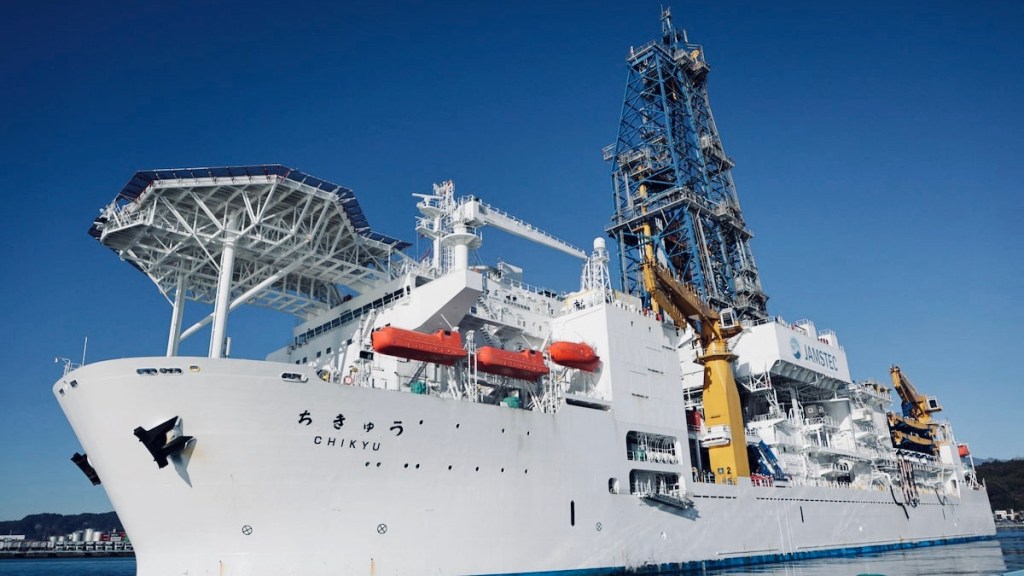
A Japanese research vessel has begun a landmark mission to test domestic extraction of rare earth minerals, as Tokyo moves to reduce strategic dependence on China.
The test ship Chikyu is operating near Minamitori Island, around 1,900 km southeast of Tokyo, in what officials say is the world’s first attempt to continuously lift rare-earth seabed mud from 6 km below the ocean floor.
The government-backed programme is led by Shoichi Ishii, who said the project is designed to secure “a stable supply of minerals essential to industry”.
The initiative follows new Chinese export controls on dual-use items and heightened geopolitical tensions over critical minerals.
Key points
• Japan has cut reliance on China from 90% to about 60% since 2010
• Heavy rare earths for EV and hybrid motors remain largely China-sourced
• The project has received ¥40bn in funding since 2018
• A full-scale mining trial is planned for February 2027
ℹ️ Reuters
Follow on social media TikTok@tut0ughInstagram@tut0ugh Threads@tut0ugh X@tut0ugh YouTube@tut0ugh


 tut0ugh