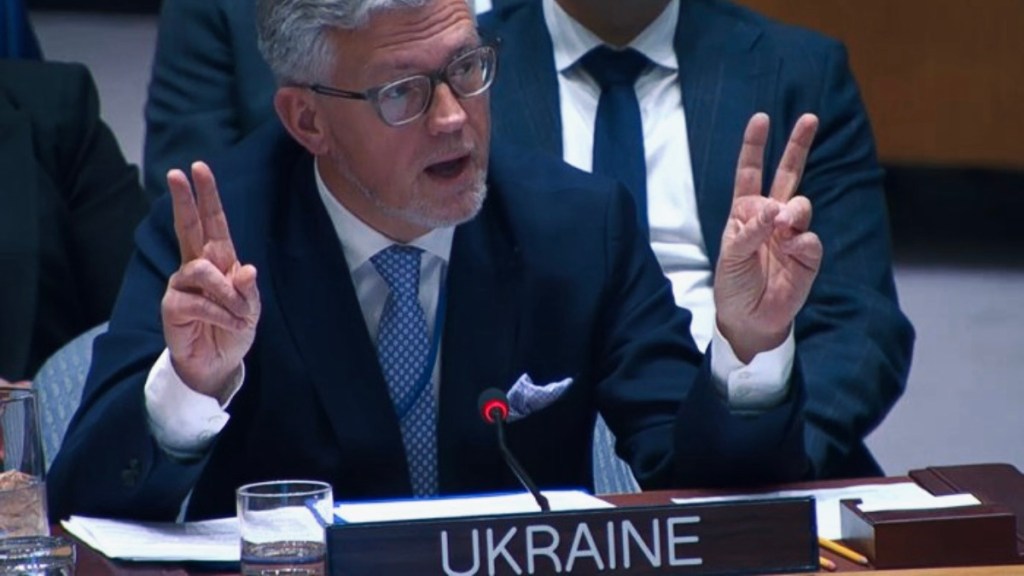
The UN Security Council held its 10,087th meeting on 12 January 2026, during which Russia, Ukraine and their partners exchanged sharply opposing accounts of the war and its implications for European and global security.
Russia’s representative accused some Council members of acting as “mouthpieces for the party of war” and ignoring the causes of the European security crisis.
He denied that Russian forces target civilians, saying strikes are directed at transport, airport and energy infrastructure linked to Ukraine’s military-industrial capacity, and warned that further attacks on Russian civilians would provoke firm responses.
Ukraine’s delegate countered that Russia is projecting an image of strength to intimidate the international community, but that this is an illusion masking strategic weakness.
He said Russia is becoming increasingly fragile under the strain of war, comparing its position to the Soviet Union in its final years — overextended, economically burdened, and internally decaying — and argued that Moscow’s threats conceal vulnerability rather than power.
Recent battlefield developments point to further escalation. Russia has used its Oreshnik hypersonic ballistic missile for only the second confirmed time, a move Ukraine and its partners describe as a dangerous signal. Moscow said it was retaliation for an alleged attack on the Russian President’s residence, a claim Kyiv rejects.
The Oreshnik launch formed part of a wider wave of missile and drone attacks on energy and infrastructure, again placing pressure on civilian power, heating and essential services.
ℹ️ UN Web TV
Follow on social media TikTok@tut0ughInstagram@tut0ugh Threads@tut0ugh X@tut0ugh YouTube@tut0ugh


 tut0ugh