
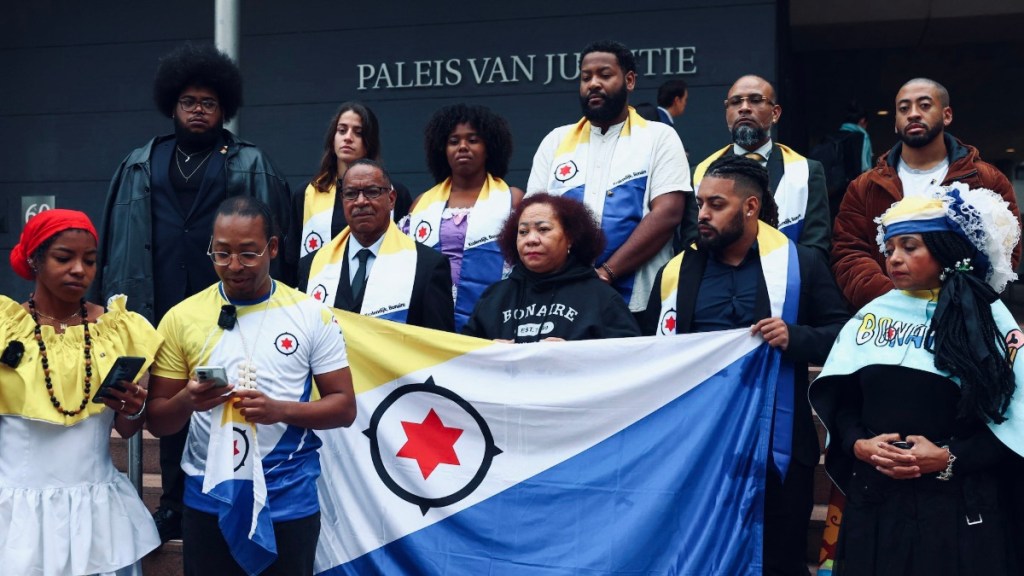
A Dutch court has ruled that the Netherlands unlawfully discriminated against residents of Bonaire, a Caribbean special municipality, by failing to adequately support climate change adaptation and by not doing its fair share to cut emissions.
The Hague court found breaches of articles 8 and 14 of the European Convention on Human Rights, citing unequal treatment compared with residents in the European Netherlands. The case was brought by Bonaire residents alongside Greenpeace Nederland. Although the court rejected the complaints by individuals, it did admit Greenpeace’s claim as an organisation.
Key rulings
• The state must develop a concrete climate adaptation plan for Bonaire.
• Within six months, the Netherlands must set a transparent national carbon budget aligned with limiting warming to 1.5°C.
• Legally binding interim emissions targets are required.
The court rejected arguments that existing Dutch mitigation efforts were sufficient, noting obligations based on capacity and historical emissions. Climate opinions from the International Court of Justice and the Inter-American Court of Human Rights were referenced.
Climate policy minister Sophie Hermans said the government would review the ruling. The decision can be appealed.
Bonaire has been under Dutch control for more than four centuries and became a special municipality of the Netherlands in 2010, following the dissolution of the Netherlands Antilles.
While residents hold Dutch citizenship and fall under Dutch law, the island has long faced structural challenges linked to its geographic distance, limited administrative capacity, and unequal access to public resources. The court’s ruling underscores ongoing tensions in how the Netherlands governs and supports its Caribbean territories, particularly as climate risks intensify.
ℹ️ The Guardian
Follow on social media TikTok@tut0ughInstagram@tut0ugh Threads@tut0ugh X@tut0ugh YouTube@tut0ugh


 tut0ugh