
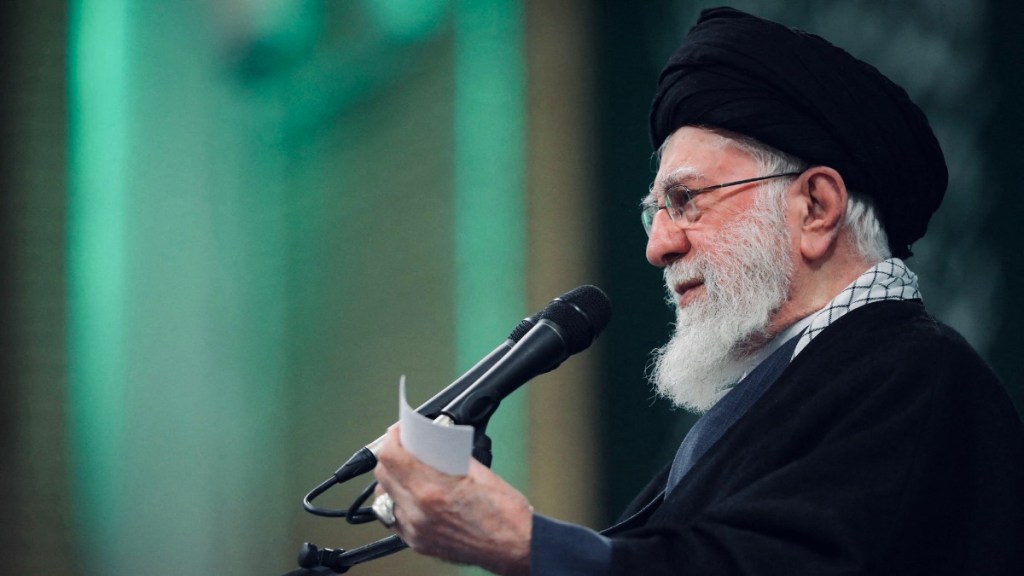
Iran’s Supreme Leader, Ayatollah Ali Khamenei, warned that “the Americans must be aware that if they wage a war this time, it will be a regional war.”, stressing that Iran is “not the instigator” and does not plan to attack any country, but would deliver “a heavy blow” if it is attacked or harassed, as US forces expand their presence near Iranian waters.
He said Iran would not be intimidated by US military deployments, including the aircraft carrier USS Abraham Lincoln, now operating in the Arabian Sea.
US President Donald Trump said talks with Iran were “serious” and could produce an acceptable outcome. Ali Larijani, Iran’s senior security official, said negotiations were progressing.
Key developments
• Iran plans live-fire naval exercises in the Strait of Hormuz, a vital global energy route.
• Around 20% of traded oil passes through the strait.
• Last week Trump said he had told Iran that it had to do two things to avoid US military action: “Number one, no nuclear. And number two, stop killing protesters.”
As fears of a US–Iran conflict intensify, regional states are pursuing diplomacy to contain escalation. Iranian Foreign Minister Abbas Araghchi has engaged Türkiye, Pakistan, Egypt, Saudi Arabia, the UAE, and India, signalling Tehran’s push for de-escalation.
Talks in Ankara with President Recep Tayyip Erdoğan and Foreign Minister Hakan Fidan, alongside outreach to Islamabad and Cairo, emphasised sovereignty and regional stability.
These efforts coincide with Washington’s approval of major US arms sales to Israel and Saudi Arabia, highlighting uncertainty over whether diplomacy can ease tensions or merely delay a wider confrontation.
ℹ️ AP News, BBC News, The Times of Israel
Follow on social media TikTok@tut0ughInstagram@tut0ugh Threads@tut0ugh X@tut0ugh YouTube@tut0ugh


 tut0ugh