
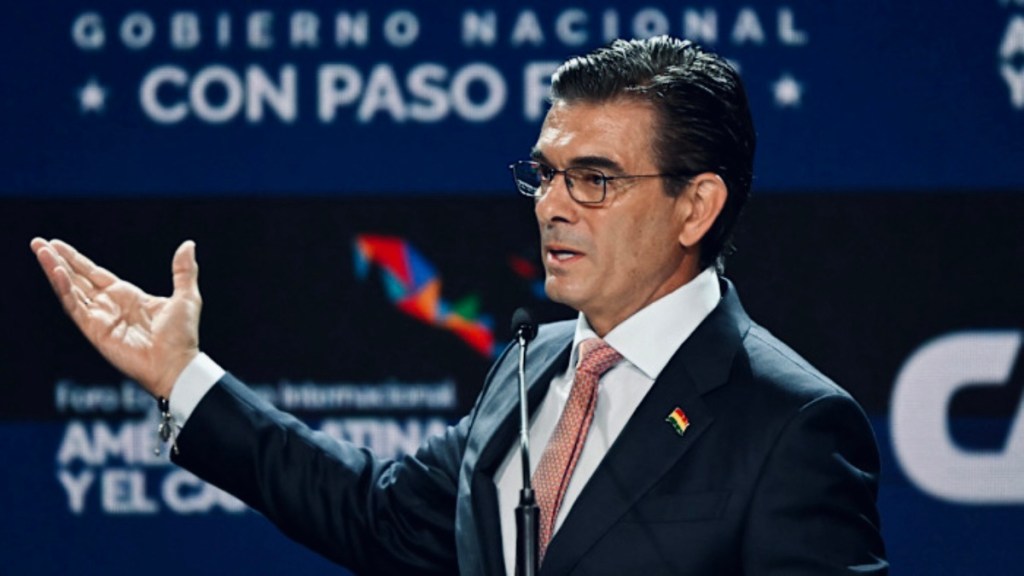
Bolivia’s President Rodrigo Paz is planning sweeping economic reforms aimed at expanding mining and oil exploration and attracting foreign investment, marking a shift from nearly two decades of socialist-led governance.
Paz said new laws will introduce 50-50 risk-sharing partnerships with foreign investors to develop Bolivia’s natural resources, including lithium, silver and tin. Contracts signed under former socialist president Luis Arce with China and Russia will be reviewed for transparency.
Bolivia faces severe economic pressures after Paz took office in November, including depleted reserves, high inflation and an 11% fiscal deficit. The government has declared an economic emergency and removed fuel subsidies to stabilise finances.
“We need a new oil and gas law,” Paz told the Financial Times in an interview while attending an economic forum in Panama. “Peru last year had mining revenues of around $50bn. Chile had revenues with state and private companies of $65bn. And we . . . had just $6bn,” he said.
Key developments:
• Bolivia holds about 20% of global lithium reserves.
• Minimum wage increased by 20% to 3,300 bolivianos.
• Country risk fell from 1,200 to around 600 basis points.
• The Inter-American Development Bank pledged $4.5bn in support.
• US Secretary of State Marco Rubio backed the reforms.
Paz has also restored full diplomatic relations with the United States while facing political risks from former president Evo Morales.
Follow on social media TikTok@tut0ughInstagram@tut0ugh Threads@tut0ugh X@tut0ugh YouTube@tut0ugh


 tut0ugh