
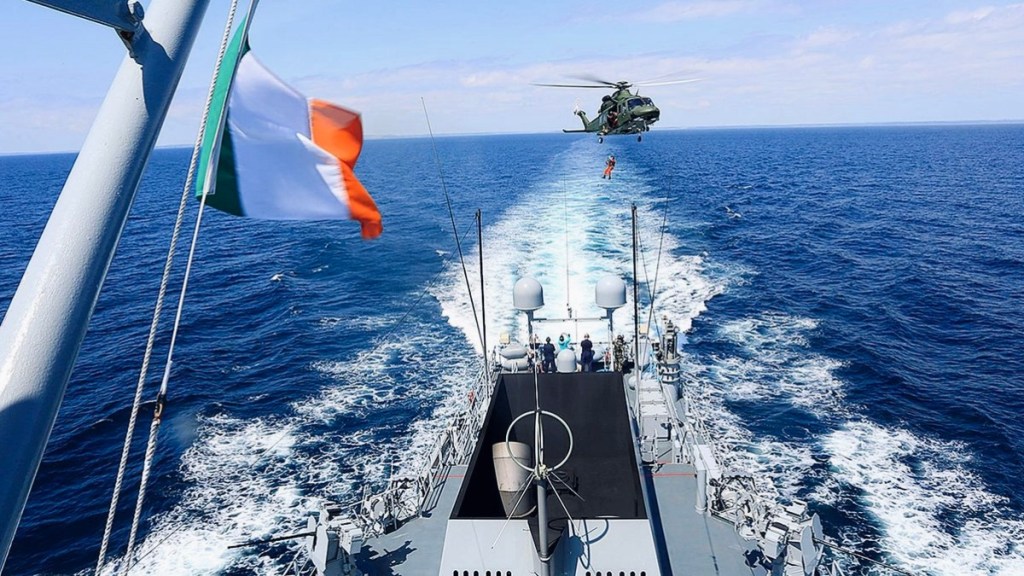
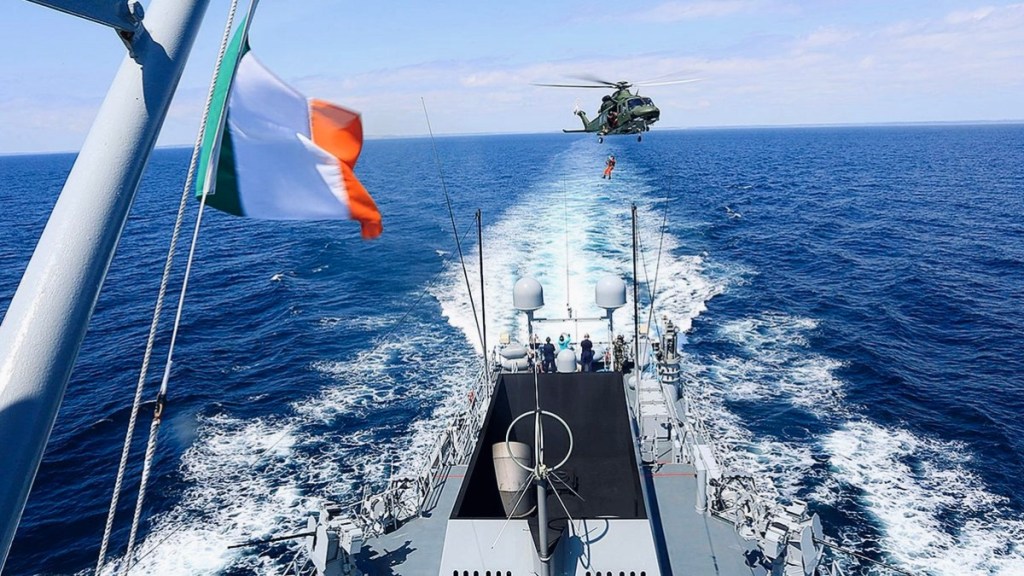
Ireland has unveiled its first maritime security strategy, outlining plans to strengthen radar and subsea surveillance amid rising hybrid threats in the North Atlantic.
Published by the Department of Defence, the strategy highlights vulnerabilities across Ireland’s territorial waters, which host major transatlantic data cables and critical energy interconnectors.
The document cites concerns over Russia’s alleged “shadow fleet”, accused of potential espionage and sabotage. Moscow denies the claims.
“If anything happened to gas connectors with Britain, we wouldn’t have an economy in 10 days,” Prime Minister Micheal Martin said in parliament when challenged by the opposition on the plans to cooperate with NATO member states.
Key measures include:
• Development of new radar, towed sonar and sonobuoy systems within two years.
• Expanded cooperation with NATO members.
• Potential participation in the Joint Expeditionary Force
• Increased use of maritime drones, uncrewed vessels and space-based monitoring
Ireland allocated around 0.2% of GDP to defence in 2023 — the lowest share in the European Union and well below the EU average of 1.3%, according to official statistics.
Although the government’s €1.5 billion defence budget for 2026 is roughly one-third higher than four years ago, no plans have been set out to align spending more closely with the EU average.
ℹ️ Reuters
Follow on social media TikTok@tut0ughInstagram@tut0ugh Threads@tut0ugh X@tut0ugh YouTube@tut0ugh


 tut0ugh