
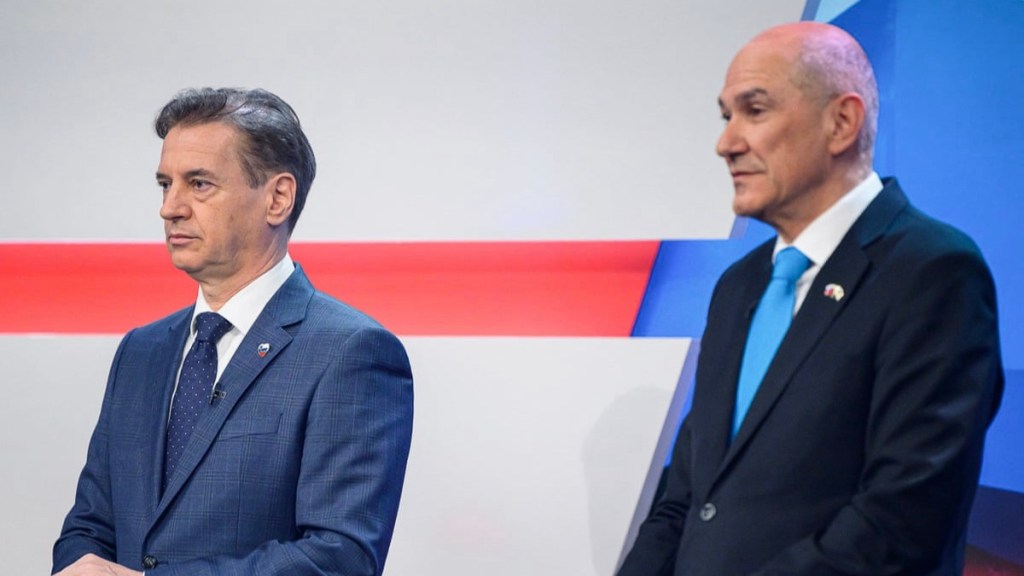
Slovenia votes on Sunday (22 March) in a closely contested parliamentary election, seen as a barometer of Europe’s political direction. Voters must choose between the governing Freedom Movement of Prime Minister Robert Golob and the opposition Slovenian Democratic Party led by former prime minister Janez Janša.
Polls suggest neither bloc will secure a majority in the 90-seat parliament, raising the likelihood of coalition negotiations amid rising political polarisation.
The campaign has been overshadowed by allegations involving Israeli firm Black Cube, accused of orchestrating a smear operation. Janez Janša denied wrongdoing but confirmed meeting a company representative.
• Opinion polls indicate a tight race with no clear majority
• Allegations of foreign interference and disinformation have intensified tensions
• President Emmanuel Macron backed claims of external interference
• Slovenia’s vote precedes a key election in Hungary involving Prime Minister Viktor Orbán
The result may shape Slovenia’s stance within the European Union and NATO, with broader implications for regional politics.
ℹ️ nytimes
Follow on social media TikTok@tut0ughInstagram@tut0ugh Threads@tut0ugh X@tut0ugh YouTube@tut0ugh


 tut0ugh