
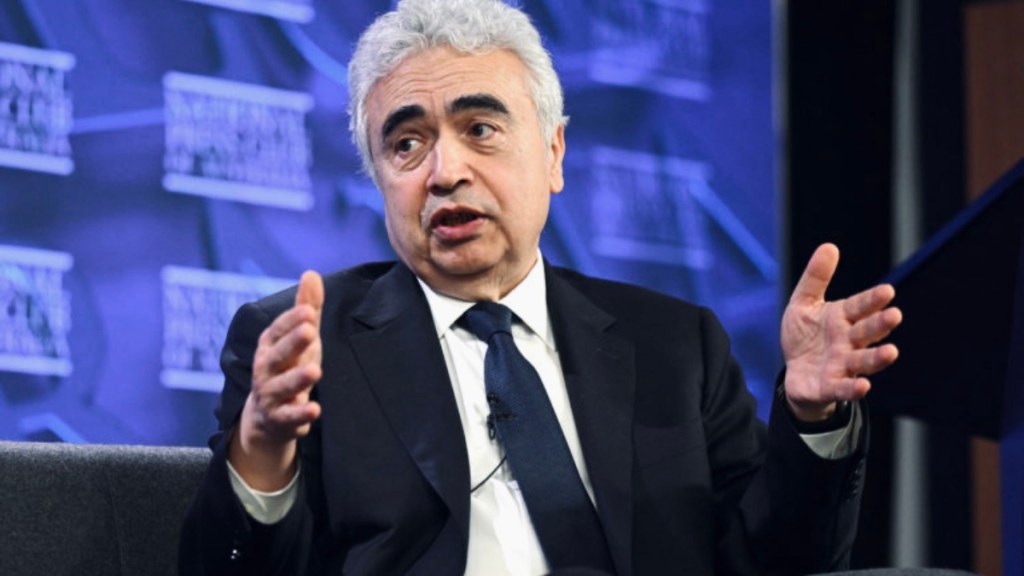
Dr Fatih Birol, Executive Director of the International Energy Agency (IEA), has warned that global energy markets are under severe pressure due to sustained supply disruptions from the war in the Middle East — including the effective closure of the Strait of Hormuz — in what he describes as a ‘very severe’ situation.
Addressing the National Press Club of Australia, Birol compared today’s situation to historic oil shocks, emphasising the far-reaching implications for energy security, competitiveness, and sustainability.
Birol warned that supply chains for essential commodities—including petrochemicals, fertilisers, sulfur, and helium—are facing severe disruptions, emphasising that the scale of the crisis requires urgent action from policymakers worldwide.
During his trip to Australia, Dr Birol met with Prime Minister Anthony Albanese and senior Australian officials in Canberra to discuss the significant energy market challenges facing the Asia-Pacific region due to the war in the Middle East, and potential measures to ease pressures on consumers.
The effective closure of the Strait of Hormuz has reduced much of the region’s oil and gas flows, causing acute supply disruptions across Asia-Pacific, the main destination for Middle Eastern fuel exports.
In their discussions, Dr Birol thanked Prime Minister Albanese for Australia’s actions to safeguard fuel security, including support for recent IEA initiatives.
On 11 March 2026, IEA member countries agreed to release 400 million barrels of oil from emergency reserves, the largest coordinated intervention in history.
Dr Birol also held a bilateral meeting with Minister for Climate Change and Energy Chris Bowen, spoke at a high-level event in the Great Hall of Australia’s Parliament House.
Follow on social media TikTok@tut0ughInstagram@tut0ugh Threads@tut0ugh X@tut0ugh YouTube@tut0ugh


 tut0ugh