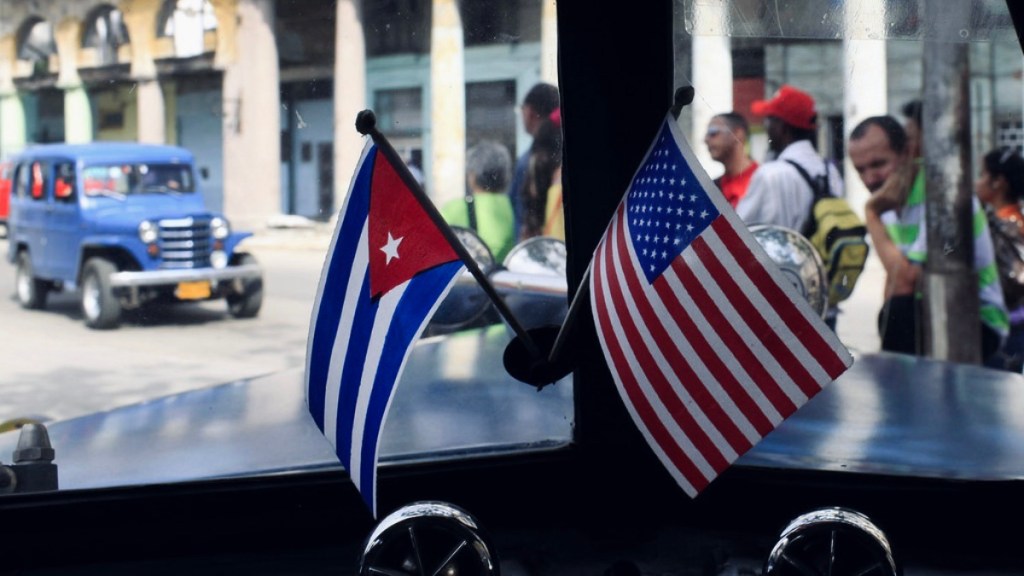
President Donald Trump has signed an executive order expanding US sanctions on Cuba, formally escalating measures under a declared national emergency related to what the White House describes as threats to US national security and foreign policy.
The 1 May 2026 order states that the policies of the Government of Cuba constitute an “unusual and extraordinary threat” and authorises wide-ranging economic and financial restrictions on designated individuals, entities, and affiliates linked to the Cuban state or its networks.
It provides for the blocking of assets, restrictions on transactions, and the application of secondary sanctions to foreign financial institutions that facilitate significant dealings with sanctioned parties.
The framework covers sectors including energy, defence, mining, financial services, and security, alongside provisions addressing alleged corruption and serious human rights abuses.
The order also introduces travel restrictions for individuals meeting designation criteria and extends prohibitions to certain forms of indirect support, including financial and material assistance.
Cuban authorities condemned the new measures, describing them as “collective punishment” against the Cuban people. President Miguel Díaz-Canel said Havana rejected what he called “unilateral coercive measures” imposed by the United States, while Cuban officials characterised the sanctions as illegal and abusive.
The measures took effect during May Day demonstrations in Havana, where large crowds marched near the US embassy under the slogan “Defend the Homeland.”
The rally was led by Miguel Díaz-Canel and former Cuban leader Raúl Castro amid broader criticism of the long-standing US embargo and recent restrictions affecting fuel supplies, trade, and tourism on the island.
ℹ️ The White House, Le Monde with AFP
Follow on social media TikTok@tut0ughInstagram@tut0ugh Threads@tut0ugh X@tut0ugh YouTube@tut0ugh
 tut0ugh