
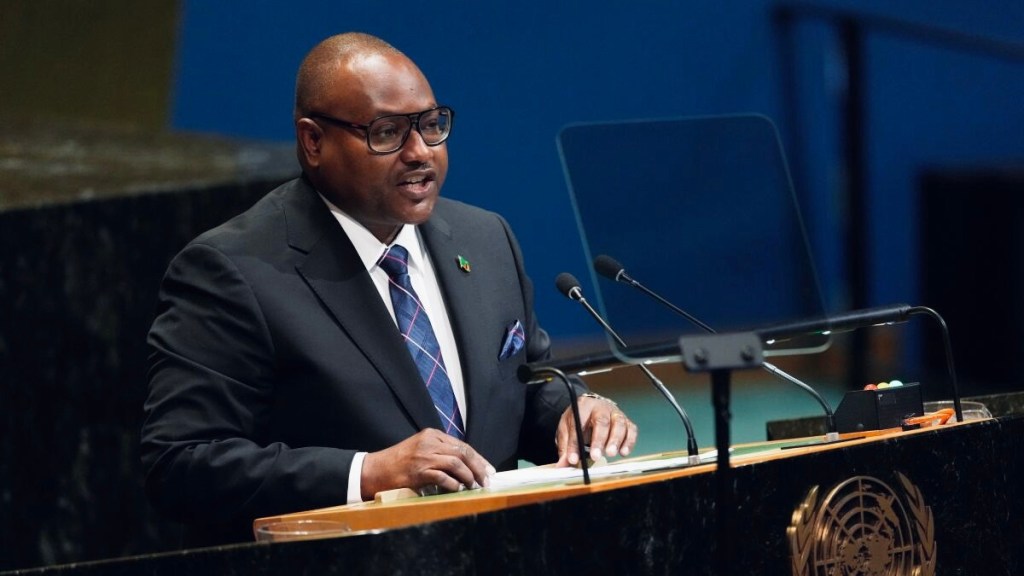
Zambia has accused the United States of linking a proposed $2 billion health assistance agreement to access to the country’s critical mineral resources, amid wider tensions over Washington’s evolving Africa policy.
In a statement, Zambia’s Foreign Affairs Minister Mulambo Haimbe described the accusations of Zambian graft and negotiation inertia by outgoing US ambassador Michael Gonzales as “mischievous” and “deeply regrettable, undiplomatic and inconsistent with the spirit of mutual respect.”
Haimbe also accused the US of tying access to critical minerals to the conclusion of the health deal, which Gonzales earlier dismissed as “alarmist allegations” that he called “disgusting” and “absolutely and patently false.”
Gonzales in late April said Zambian leaders had “abdicated their responsibilities, letting the United States pay for healthcare while officials diverted government funds to their own pockets.” He said Zambian authorities had “ignored” US overtures to conclude a new deal.
But Haimbe said negotiations had stalled over “unacceptable” data-sharing demands “in violation of our citizens’ right to privacy” and “the insistence on preferential treatment of US companies over Zambia’s critical minerals.”
Beyond Zambia, concerns over the new agreements have also emerged elsewhere in Africa. Ghana recently rejected a proposed US deal over sensitive health data provisions, while Zimbabwe withdrew from a $367 million package citing similar issues.
In Kenya, a $2.5 billion agreement signed in December has been suspended pending a legal challenge over data protection laws. Lesotho also negotiated down a proposed 25-year US access request for health data and biological samples to a five-year arrangement.
The dispute comes as the United States reshapes its foreign assistance model following the dismantling of USAID and the President’s Emergency Plan for AIDS Relief (PEPFAR).
Washington is now pursuing country-by-country agreements that link health funding to conditions including domestic financing commitments, disease surveillance, pathogen sharing and commercial provisions.
Since late 2025, the US has signed agreements with around 30 countries, many in Africa, arguing the strategy is designed to reduce donor dependency, encourage local ownership and protect American strategic interests.
ℹ️ AP News
Follow on social media TikTok@tut0ughInstagram@tut0ugh Threads@tut0ugh X@tut0ugh YouTube@tut0ugh

 tut0ugh