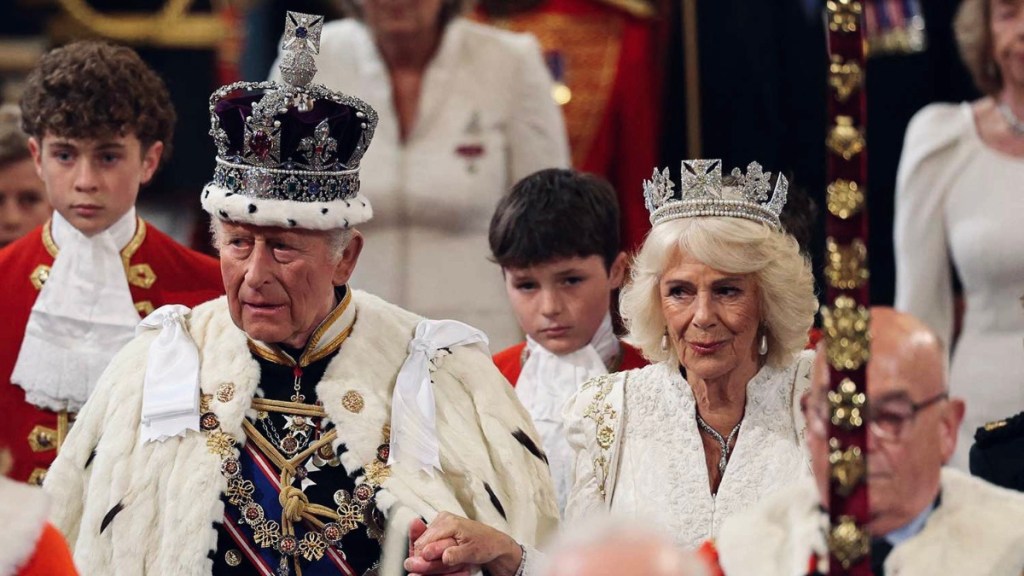
King Charles III used the King’s Speech 2026 to outline the UK government’s legislative agenda, warning that an “increasingly dangerous and volatile world threatens the United Kingdom”.
Speaking before both Houses of Parliament on Wednesday (13 May), the monarch said “every element of the nation’s energy, defence, and economic security will be tested”, citing the conflict in the Middle East as “only the most recent example” of global instability.
The speech reaffirmed Britain’s “unflinching support for the brave people of Ukraine who fights on the front line of freedom” and the UK’s “unbreakable commitment to NATO and our NATO allies”, alongside plans for sustained increases in defence spending.
Domestically, the government pledged reforms covering economic growth, immigration, public services, infrastructure, housing, energy independence and cyber security.
Proposed legislation included measures to strengthen UK-EU trade ties, expand renewable and nuclear energy, reform schools and special educational needs provision, and modernise public services through digital ID systems.
The address comes amid mounting political pressure on Prime Minister Sir Keir Starmer following Labour’s poor local election results and months of scrutiny linked to the Peter Mandelson controversy.
Recent ministerial resignations and growing calls from Labour MPs for a leadership transition have intensified questions surrounding the government’s stability.
Against that backdrop, the King’s Speech sought to project stability and long-term direction, with repeated emphasis on national resilience, economic security and institutional reform.
The speech concluded with a broader focus on Britain’s global role, including its upcoming G20 presidency, climate commitments and cooperation with devolved governments across the United Kingdom.
Follow on social media TikTok@tut0ughInstagram@tut0ugh Threads@tut0ugh X@tut0ugh YouTube@tut0ugh


 tut0ugh