
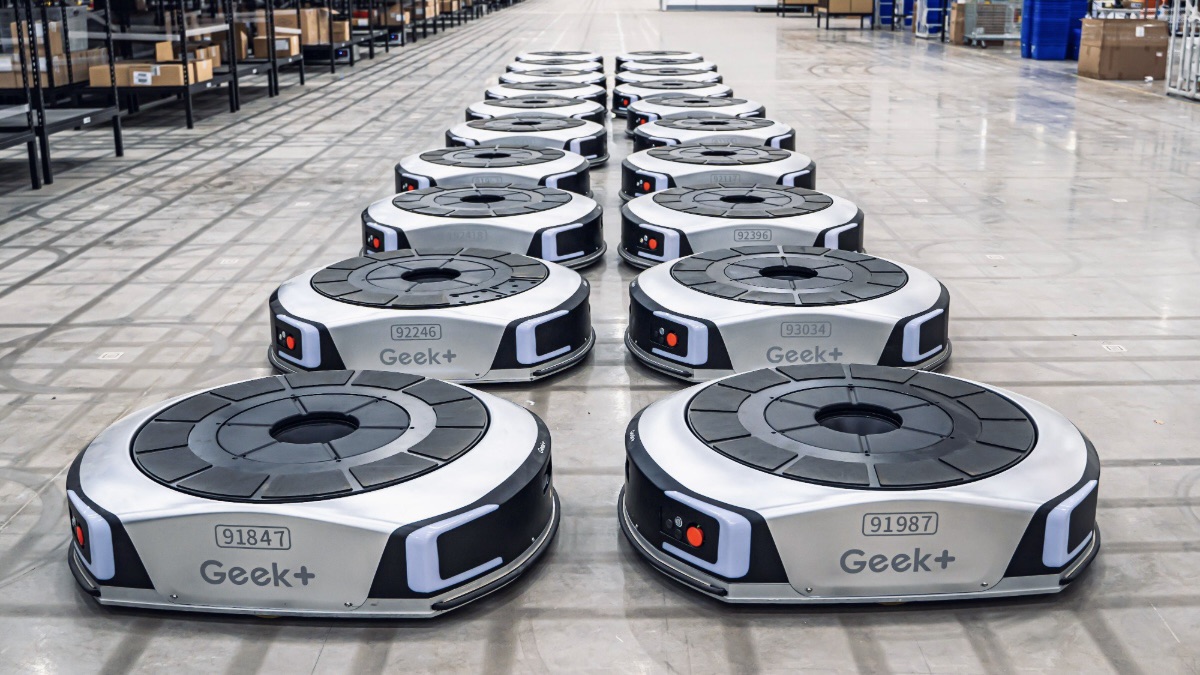
Warehouse automation is accelerating worldwide as businesses invest in autonomous robots and artificial intelligence to improve efficiency, reduce costs and meet growing e-commerce demand. Modern systems enable fleets of mobile robots to transport goods directly to workers, increasing productivity while reducing the time spent walking across warehouse floors.
Chinese company Geek+, the world’s largest supplier of autonomous mobile warehouse robots, is among the firms driving adoption. In the UK, retailers including Next, Tesco and Asda have introduced robotic systems to support fulfilment operations, reflecting a broader shift across the logistics sector.
Globally the warehouse robotics market is valued at an estimated US$8–10 billion in 2025 and projected to exceed US$25 billion by the early 2030s, driven by rising e-commerce demand, labour shortages and the adoption of artificial intelligence-powered automation systems.
Advances in software now allow hundreds of robots to operate simultaneously using QR-code navigation rather than fixed tracks, while developers are also testing AI-powered humanoid robots capable of performing more complex warehouse and manufacturing tasks. Labour shortages, rising operating costs and increasing consumer expectations for faster deliveries continue to drive investment in automation.
Looking ahead, robotics is expected to become an increasingly important part of global supply chains, creating opportunities for greater productivity, resilience and workplace safety. However, widespread adoption will depend on overcoming challenges including high implementation costs, integration with existing infrastructure, cybersecurity, workforce reskilling and the technical complexity of automating tasks that still require human dexterity.
ℹ️ BBC News
Follow on social media TikTok@tut0ughInstagram@tut0ugh Threads@tut0ugh X@tut0ugh YouTube@tut0ugh


